LabOS
One workspace for laboratory work.
I took the Quickbase MVP forward through branding, UI/UX across laboratory functions, and close collaboration with engineering.
- My role
- Product designer · Contract
- Team
- Healthbit CEO + software engineers
- Year
- 2025
- Scope
- Brand, UI system, product screens, Figma handoff
Starting point
Taking the Quickbase MVP forward
LabOS began in Quickbase. My role was to design its identity and interface from the ground up, with screens for multiple laboratory functions.
The business bet was to bring work spread across different tools into one application. The starting inputs were the Quickbase MVP and the Healthbit CEO’s firsthand experience using lab software as a pathology scientist.
Design tradeoff
Keep the wider system within reach
I designed navigation and shared UI patterns across LabOS so its different functions had a common structure. Keeping that navigation visible uses screen space, but gives technicians a route to the rest of the system.
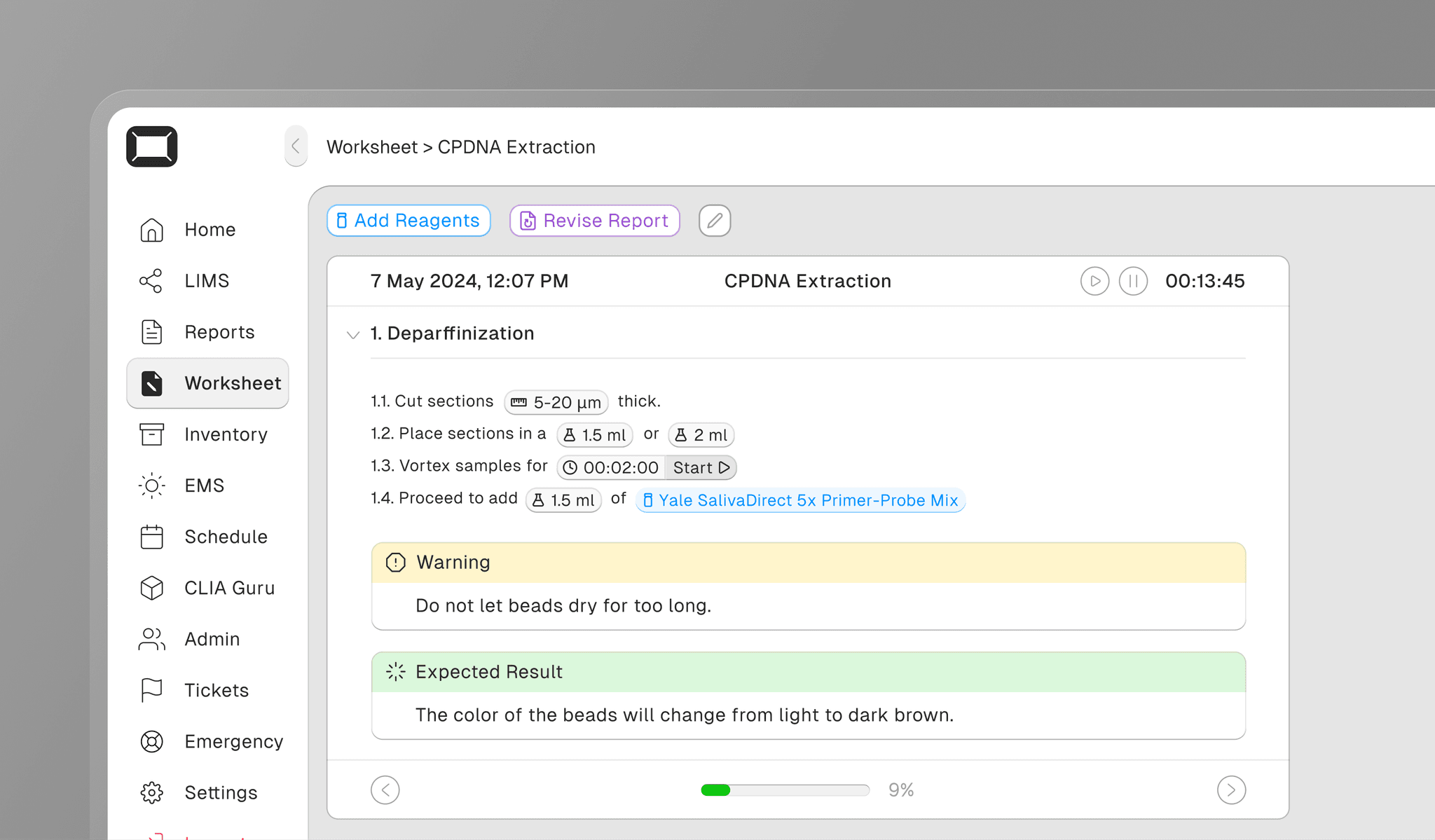
Within a procedure, I put the step-specific information and controls together. The worksheet shows the balance: the wider system stays available while the current task remains the focus. Its active navigation state, inline quantities, and separate warning and expected-result panels distinguish key information.
One workflow
Keep timing beside the instruction
The CPDNA Extraction worksheet is one example of the wider work. Steps, quantities, timer controls, warnings, and expected results sit in the same view to support the person performing the test.
Engineering collaboration
From lab knowledge to engineering handoff
Healthbit’s CEO, a pathology scientist, brought firsthand lab experience. I translated that input into Figma designs, prepared them for the software engineers, and reviewed live work against the designs, including the small details.
Present-day reflection
Measure the work in the lab
Working with a pathology scientist and reviewing live implementation gave me ways to check the interface against lab practice and the built product. If I revisited the work now, I would bring lab technicians into task-based reviews earlier.
I would establish a baseline in the earlier workflow, then compare how long it takes to find a function, how often a procedure requires switching tools, and whether steps are missed or repeated. These are proposed success measures, not results from this project.